
Caleb Sasser's Soulful Story: Gospel Roots, Toni Braxton, and The Voice's Impact
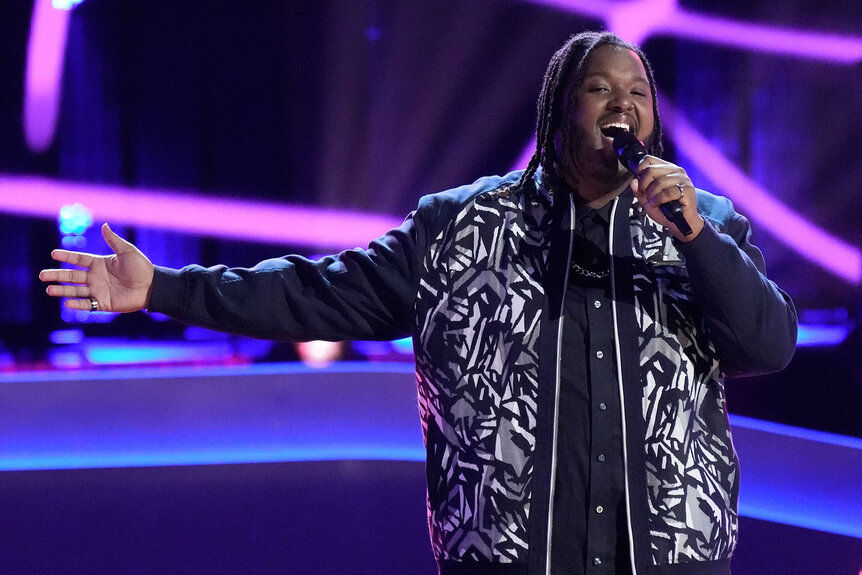
One could say that Caleb Sasser’s journey began in pews lined with echoes of gospel, crescendoed beneath cathedral ceilings and ended—if one can really say it ever ended—on the neon-lit stages of American television. But the truth is, stories like his begin before any spotlight is cast, their roots tangled in the simplest acts: a child humming a hymn, a family strict in love and faith, a voice rising, trembling, certain, soaring.
Sitting across from Caleb—if only virtually, as the pandemic and schedules often dictate—the first thing that strikes you isn’t even the voice that stunned America on "The Voice" but rather the warmth, candor, and humility that seems to underpin everything he shares.
“What's up, y'all? It's Caleb Sasser, and you're watching SWAVV,” is how he introduces himself with an easy smile, a realm apart from the trembling nerves that might shadow any rising star. But ask him where the journey truly began and the answer is as immediate and instinctive as any note he sings: church.
“I grew up singing in church,” he says, a soft nostalgia blooming in his voice. “I think I joined the choir around age four or five, and I had my first solo around age six or seven. It was, ‘Oh, How I Love Jesus.’ Once I had my first solo, I knew just from the reaction of the congregation and how it made me feel—being on that stage—I knew I wanted to do that forever, basically.”
For anyone who grew up among the relentless rhythms of Sunday service, the memory of children’s choirs is sacred—a mosaic of awkward shuffles, pressed shirts, and that rare, trembling, golden-throated soloist who lifts the atmosphere. Caleb was, unambiguously, that child.
“Oh, yeah,” he laughs when asked if he tore the church down as a kid. “That's literally what gave me the passion for music.”
But even as gospel was the foundation, life outside the stained glass inevitably crept in—first as a whisper, then, as adolescence pressed, in full voice. Caleb’s first brush with secular music was almost illicit, a rite of passage for anyone raised within the boundaries of Christian radio and hymnals.
“Well, growing up my mom and dad were pretty strict, so we could only listen to gospel music for a really long time. Then when they separated, that's kind of when we started breaking off and doing our own thing. So, that was probably about my high school year…end of middle school, beginning of high school is when I started breaking into listening to Faith Evans and Beyoncé and John Legend—like, really getting into all the other stuff that I'd never heard before.”
It felt, he says, “like a journey. Honestly…like nothing that I'd heard before because I'd only been listening to gospel. I remember the first song specifically was Beyoncé's ‘Irreplaceable.’ And my mom would always hear me listening to that, and she'd walk in my room, turn it off. But I don't know, it was just something about that, how it was just so groovy…”
One has to smile at the image: a child sneaking pop records like contraband, soaking up the groove of modern R&B, enthralled and compelled but always circling back to that foundation, gospel. If faith was shelter, then music—whether gospel or otherwise—was expression, and perhaps escape.

Sasser’s formative playlist read like a love letter to gospel’s greatest: “Definitely growing up, we were listening to a lot of Kirk Franklin and Mary Mary, Yolanda Adams and CeCe Winans were probably, like, some of the main ones. CeCe and BeBe…But, yeah, Mary Mary and Kirk Franklin are probably the top two for me.” He laughs at how, even among icons, the line between gospel and R&B is sometimes blurred: “BB and CeCe…It's just like a little R&B. They got a real soul groove.”
By middle school, Caleb was already stepping out, testing his gift beyond the sanctuary. “My first talent show was in eighth grade…I did ‘Count on Me’ by Whitney Houston and I got first place. That’s really where it all…was another step on the stone, so it was leading me to where I wanted to be.”
But what does it mean to know, even as an adolescent, that you are genuinely, demonstrably talented? For Caleb, affirmation came early—not just through applause, but from within. “I feel like I’ve always known that kind of in my head, especially from a young age, starting at middle school. That’s where I really started doing the talent shows.”
Yet even as his star rose locally, nerves rarely took hold. “Honestly, when I'm singing, that's the most free that I feel. So, it doesn't make me nervous to necessarily sing, even, like, for ‘The Voice’—I wasn't nervous because their backs were turned…I couldn't see their facial expressions. I couldn't see them judging me. So it made—literally the easiest part of the whole entire Voice process.”
It was with this sense of liberation that Caleb Sasser took the stage, in front of an audience of millions, and changed his life—though the moment came not after months of plotting but in a burst of blessed surprise, and a cover of Toni Braxton that left listeners breathless.
He didn’t even know for months what song would define his television debut. “They give us a list of about 400 songs, and we choose about 20 of them, and then they choose what our audition song is going to be. So, it just so happened that ‘Another Sad Love Song’ was my number one pick…I'd covered it on Instagram about a year ago, and it was kind of similar to the arrangement, but I just had more time, since I knew that was going to be on my audition for ‘The Voice,’ I had more time to polish it and kind of tweak it the way I wanted it.”
The performance that stunned the Internet—and moved John Legend to his feet—wasn’t just a technical showpiece, but the culmination of years of private refinement. "It was mind-blowing," Sasser recalls of the instant feedback, "I could really see how happy and proud he was," he says of his father, who had driven him to countless auditions for American Idol, X Factor, Sunday's Best, and, at last, The Voice itself. "He's been the person who's been taking me to all of my auditions... driving me across all these states... So I was so glad that he was able to share that moment with me."
To see his father, a man of stoic support, reduced to tears in the audience, was both surreal and grounding. "At first, it was a little discouraging because it's like, dang, can I really sing? I keep hearing no after no after no, but once it finally gets to that one yes, it's like everything that you've been working for is paid off. So as soon as they started turning around, I was, like, in my head, I was like, wow, I'm on the Voice right now..."
There’s a moment in every artist’s journey—sometimes public, sometimes solitary—where the dream feels undeniable; where the struggle, suddenly, makes sense. For Caleb Sasser, that moment was broadcast to the nation, but it remained intensely private in its clarity. “As soon as I finished...what was going through my mind, I was just like, I just sang this cover in front of these amazing coaches who have amazing careers that I also want to do, and they all turned around, so it was kind of a lot to process, and I don't even remember most of the moment unless—I'm glad they recorded it because I really blacked out a lot of it... it was a crazy feeling to actually be there and talking to them.”
The aftershocks of that performance rippled not only through his own life, but outward—at one point, even reaching Toni Braxton herself. “Oh, yeah. She shared it the next day. The next day tagged me in the post, and she said that she loved how I flipped ‘Another Sad Love Song’ and she wishes me the best on the Voice and she loved it.” The phone notification still lingers in his memory: “I literally would, like, stop what I was doing and try to call everybody. I didn't even open it. I was just like, it said, ‘Toni Braxton mentioned you in her story’ and I was just, like, freaking.”

And with a single viral performance, the world that once seemed closed—of labels, producers, and national stages—was suddenly wide open, clamorous, and bristling with new responsibilities. “I'm still trying to balance it all,” Sasser confides. “It has been a lot trying to be organized and respond to all the emails and the messages, but I'm thankful for it because it's honestly the goal of what I've been trying to do. So I'm adjusting to organizing myself a little bit more and being able to be present in all of those moments and take it in as well.”
No longer a full-time middle school music teacher—his former career, and one, he suggests, that deeply shaped his sense of discipline and connection—he is now an artist, performer, and entrepreneur full time. “I used to be a middle school music teacher, and so after The Voice, I stopped doing that, so now I'm doing music full time... Just singing and working. I still do voice lessons as well, but that's pretty much the life.”
That life, as it turns out, is poised for its next chapter: an EP.
“There is an EP coming out at the first quarter of this year,” he shares with a trace of the cautious optimism of artists everywhere. “I don't have the date, but it's definitely in the works... I like to call it singer-songwriter soul. It's a little bit of jazz. It's a little bit of R&B. It's a little bit of soul, like, all meshed into this one.”
If pressed to define his style, Sasser is reflective, even analytical about his influences. “That's my style...Where does your inspiration come from? Because it doesn't sound too much like anything that I heard... honestly, I don't even know what the inspiration would be. I know I like to listen to other artists like Jasmine Sullivan—she is my favorite singer. Jasmine Sullivan and Brandy is where I really take notes from. But when I say in terms of inspiration, I really just sing the songs and really just fill it out the way that I want to hear it...I try to perfect it until it's like, that's me.”
That sense of identity—the ability to weave improvisation and soul into an authentic, unmistakable presence—sets Sasser apart in a crowded industry. “Brandy's voice is like, she sings like an instrument, and I've grown to appreciate her more as I grow older because I realize how difficult that is... to hear you kind of do that same thing and utilize your voice to where it just kind of goes where it goes. And it's like playing along with the music. It's a skill that a lot of people never learn.”
For some, such facility is a blessing; for others, perhaps, it's a challenge. For Caleb, it is both. It is the singularity of his gift—and perhaps its attendant burden. Still, he harbors no illusions about the privilege of pursuing a creative calling.
“People always say, ‘I wish I could sing,’ and if I could, people would hate me because I would never stop. If I had that voice, it would be a problem.” Caleb offers a gentle rebuttal, “I feel like if they actually could sing, they would be tired of it, really.”
One wonders if that’s true—if talent itself ever becomes a weight, or if, like faith, it is always, somehow liberating. For Sasser, the answer appears rooted in gratitude and ambition in equal measure.
“So my goal for my career is to continue to sing on these large stages. I want to sing in arenas and do shows and also record music for myself, make albums, and also write songs for other people. That's really what I want to do full time, is just perform and write and record.”
The vision is simple, resolute. He seeks not merely fame, but community, not merely recognition, but resonance. “Congratulations because you're taking all the right steps,” the host, Rashod, tells him. Caleb’s reply is gracious: “Thank you.”
Of course, every singer has favorites—hidden anthems, go-to songs for the quietest moments. For Caleb, it varies, but the recent soundtrack of his days is telling: “Right now, I've been listening to a lot of Yebba and I love her song ‘October Skies.’ As well as...‘Officially Missing You’ to me are probably two of my go-tos, and ‘How Deep Is Your Love.’ Those are like my top three right now.”
On stage, Sasser isn’t just a vocalist but a true musician—something that sets him apart, even in a world of pop idols. “I'm going to have to find that...Like, as soon as we're done, I'm going to go watch that...I'll be playing the piano on that one.” When pressed, he concedes, “You could say that,” to being an instrumentalist. Yet always, it is the song and story at the heart of performance.
Ask where to find him and the answer is everywhere: “Even my blind audition, I released that song as well. ‘Another Sad Love Song’—it's on Spotify, Apple Music, Tidal, as well as my original music. I have a single out called ‘With You.’ You can find that anywhere that you listen to music under my name, Caleb Sasser.”
For those who watched him audition on “The Voice,” the music was more than entertainment; it was a moment of connection, a pause, a reason to hope for what’s next. “Congratulations on everything. Keep doing what you're doing. I'm going to look out for that EP.” The future is, as Sasser describes, all possibility.
For those of us listening—truly listening—the arc from church choir to network stage isn’t merely the tale of one young man’s breakthrough; it is a testament to persistence, adaptability, and the enduring gift of song. “I have a tattoo that says, ‘I gotta reach the world and let my voice be heard.’ It's a song that I wrote, like, in college, but being able to be on ‘The Voice’ and actually do that, it feels amazing.”
And so Caleb’s story continues: from the sacred echoes of gospel, through the R&B corridors of adolescence, past the gates of televised fame and into a world of his own making—crafted by his voice, his truth, and the unwavering support of those who have always known, even before the world could see, that theirs was a son destined not merely for the stage, but for the soul-changing, connective power of song.


Comments